What do you want to do?
Tax invoice or bill of supply — which one prints, and why
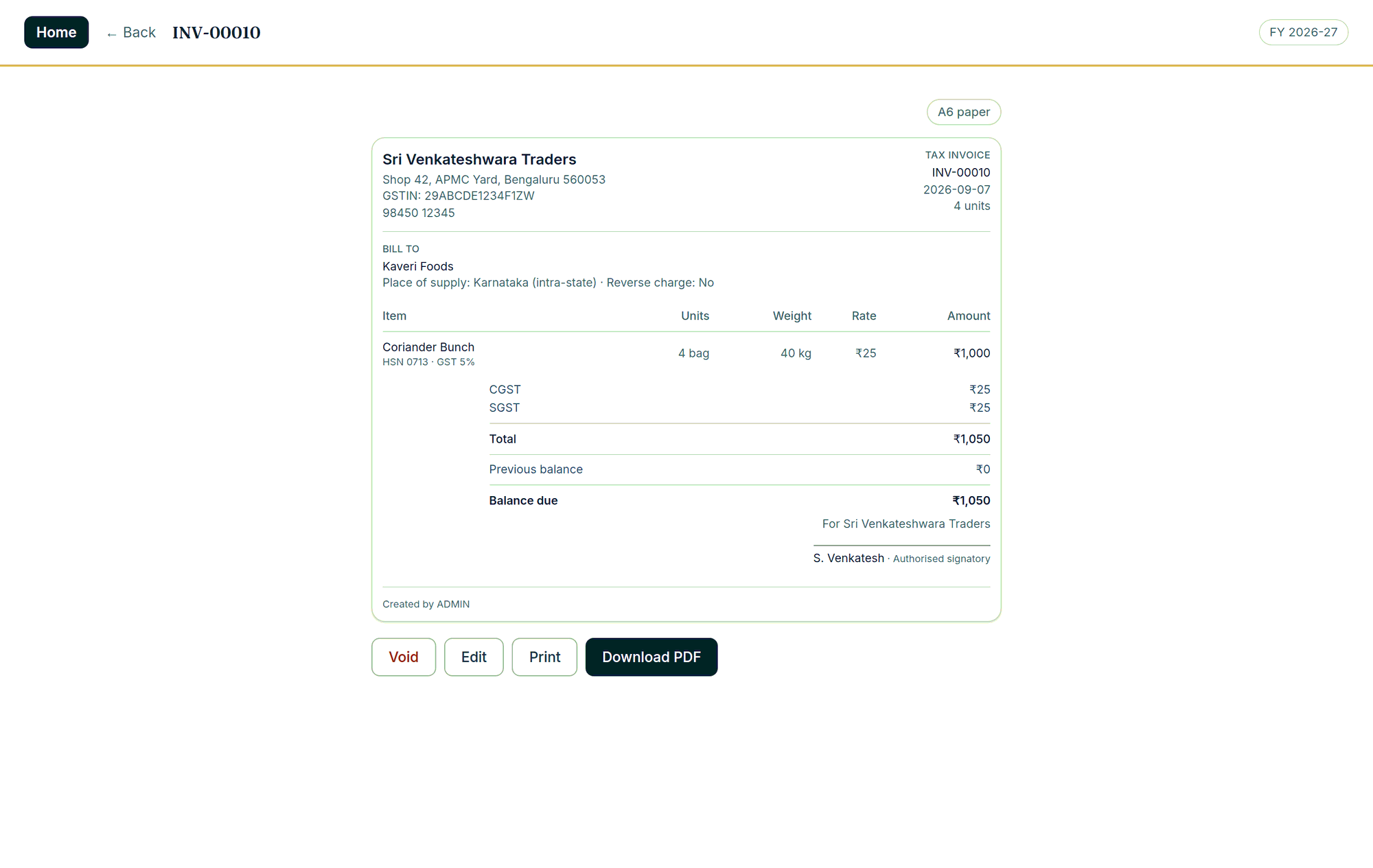
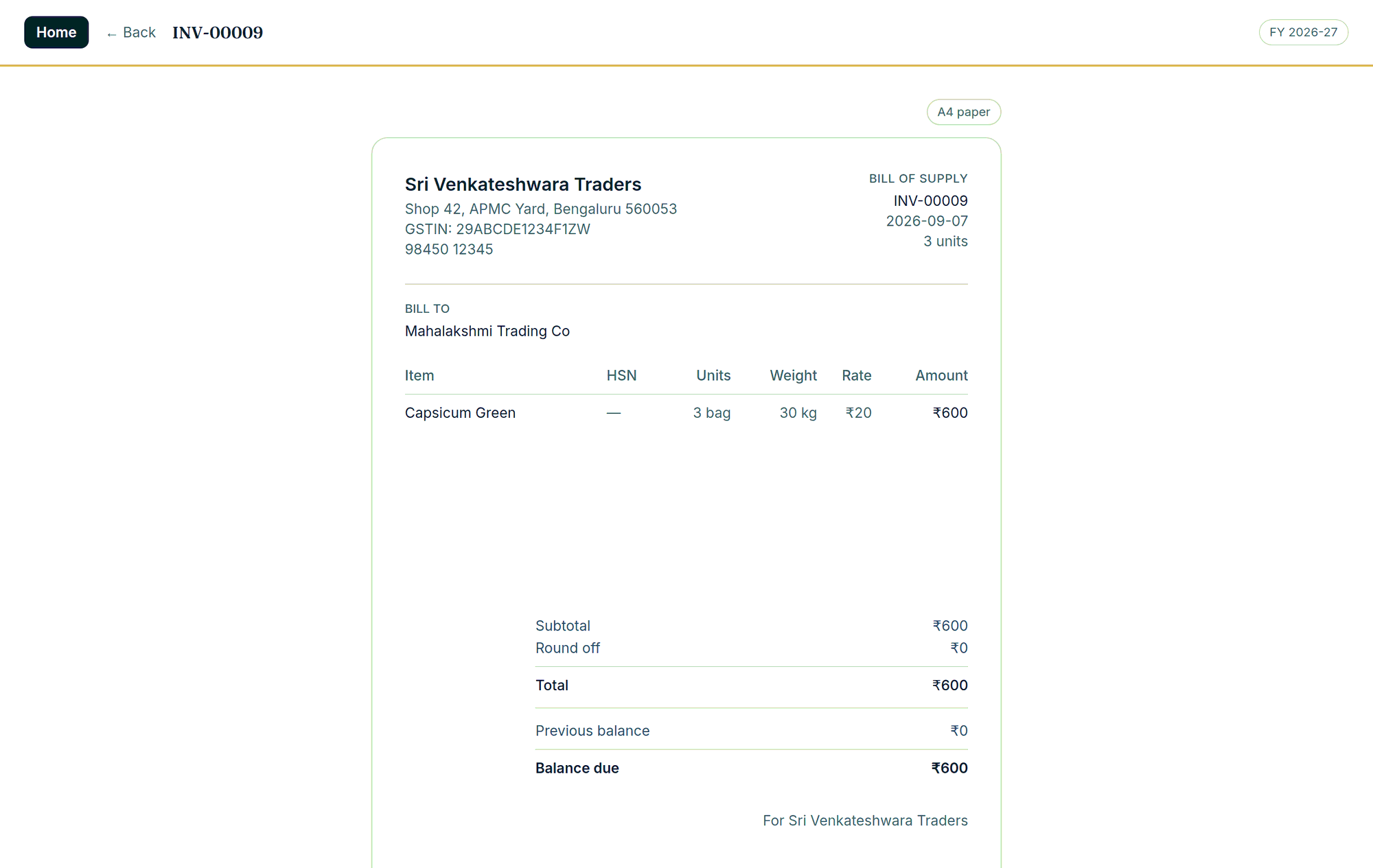
A bill with any taxable line must be a Tax Invoice. A bill of only exempt goods must be a Bill of Supply. Issuing a tax invoice showing ₹0 tax on exempt goods is not the same thing, and it can cost the buyer an input credit claim. InBilling reads the lines and prints the right heading, every time, without anyone at the counter having to know which rule applies.
What decides it
- The lines on the bill. Any taxable line → Tax Invoice (Rule 46). Only exempt goods → Bill of Supply (Rule 49), still carrying your GSTIN, the HSN and a signature line.
- The two states. Intra-state or inter-state is not a question you are asked. InBilling compares the customer’s state with the business’s own and splits the tax into CGST and SGST, or charges IGST, accordingly.
- The GSTIN. It is checked when you type it — against its own checksum and its state code — and again for the whole month before anything goes to your accountant.
Good to know
- Prices that include GST are worked back under Rule 35; fees and freight are taxed with the goods they moved under Section 15(2)(c); discounts are taken before tax.
- Supplies on reverse charge are marked on the bill, printed as such, and kept out of the tax the report says you collected.
- Fresh, loose vegetables are exempt, so many mandi and vegetable bills are bills of supply. If the business is not registered at all, turn GST billing off in Business profile and you never see a tax screen.